Request a rep

Expert Perspectives on ADHD and Transdermal Treatment

Insights from Key Opinion Leaders

This expert-led, on-demand video series features perspectives from experienced healthcare professionals actively involved in ADHD research and care. Watch as our experts explore key topics designed to help deepen understanding of various treatment approaches and help you apply ADHD insights to real-world practice.

Patch

Meet the Experts

Joel L. Young, MD
Joel L. Young, MDMedical Director and Founder, Rochester Center for Behavioral Medicine, Rochester Hills

Dr Young is a board-certified psychiatrist with extensive experience in the diagnosis and management of ADHD. In addition to his role as Medical Director and Founder of the Rochester Center for Behavioral Medicine, he serves as Clinical Associate Professor of Psychiatry … read more at Wayne State University School of Medicine and is actively involved in clinical research focused on ADHD and psychopharmacology. Dr Young has authored numerous peer-reviewed publications and frequently lectures on evidence-based approaches to ADHD treatment and clinical decision making.

Birgit H. Amann, MD
Birgit H. Amann, MDMedical Director and Founder, Behavioral Medical Center – Troy

Dr Amann is a board-certified child and adolescent and adult psychiatrist. She is the Medical Director and Founder of the Behavioral Medical Center – Troy and previously served as the Director of Child and Adolescent Services at the Rochester Center for Behavioral Medicine. … read more Dr Amann has been a primary investigator of numerous clinical trials and is a member of professional organizations including the American Medical Association, the American Psychiatric Association, the American Academy of Child and Adolescent Psychiatry, and the American Professional Society of ADHD and Related Disorders (APSARD).

Gregory W. Mattingly, MD
Gregory W. Mattingly, MDPartner, St. Charles Psychiatry Associates; President & Principal Investigator, Midwest Research Group

Dr. Mattingly is a board-certified psychiatrist with broad experience in ADHD diagnosis, treatment, and clinician education. He is a Partner at St. Charles Psychiatry Associates and serves as President and Principal Investigator of Midwest Research Group. Additionally, Dr. Mattingly … read more is an Associate Clinical Professor of Psychiatry and a Psychopharmacology Instructor at Washington University School of Medicine, and currently serves as the President of APSARD. He regularly lectures on evidence-based approaches to ADHD management and the application of clinical data in routine practice.

View and share the video series

Each video in our exclusive series focuses on a specific topic relevant to ADHD, patient care, and the features of transdermal treatment. Explore and view the videos below—and be sure to share with fellow healthcare professionals for ongoing educational discussion.

The Prevalence, Progression, and Impact of ADHD
Video 1The Prevalence, Progression, and Impact of ADHD

An overview of the prevalence of ADHD, from pediatric patients through adults, and the differences between male and female characteristics—to aid in the diagnosis and management of ADHD across patient populations.

Transdermal Drug Delivery
Video 2Transdermal Drug Delivery

A discussion on transdermal drug delivery, general attributes of transdermal drug delivery systems, a closer look at Noven’s DOT Matrix technology, and key clinical considerations.

XELSTRYM Overview
Video 3XELSTRYM Overview

An overview of XELSTRYM as a transdermal treatment option for ADHD for patients 6 years of age and older, including information on its formulation, application, role within the treatment landscape, and key efficacy and safety data from the pivotal clinical trial.

XELSTRYM Pharmacokinetics and Efficacy
Video 4XELSTRYM Pharmacokinetics and Efficacy

A review of the pharmacokinetic characteristics and efficacy data supporting XELSTRYM, including onset, duration, and offset of effect—with expert perspective on how these attributes may inform clinical decision-making.

Dermal Safety Data and Patch Adhesion
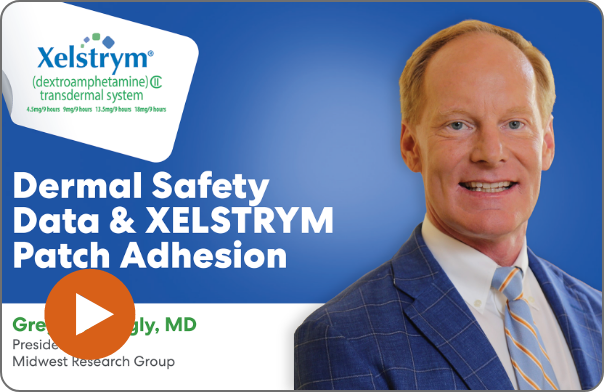
Video 5Dermal Safety Data and Patch Adhesion

An examination of dermal safety findings and patch adhesion data, including practical considerations for patient counseling and use, with a focus on application tips that may help reduce the risk of skin reactions.

Patient Profiles and Resources
Video 6Patient Profiles and Resources

A look at multiple patient scenarios, from pediatric through adult, highlighting how XELSTRYM may fit into changing schedules—as well as an overview of available resources designed to help healthcare professionals throughout the treatment process.

These expert perspectives are intended to support ongoing education and discussion around ADHD care and the use of transdermal treatment options in clinical practice.

Stay informed about future videos

Interested in receiving updates about new expert-led videos and educational resources?

If you enjoyed these expert-led videos and want to stay in the loop, subscribe for XELSTRYM updates and we’ll be sure to contact you when new content is available.

Subscribe

Learn more about XELSTRYM copay support

Learn more
Important Safety Information
INDICATION AND LIMITATIONS OF USE

XELSTRYM (dextroamphetamine) transdermal system, CII is indicated for the treatment of Attention Deficit Hyperactivity Disorder (ADHD) in adult and pediatric patients 6 years and older. The use of XELSTRYM is not recommended in pediatric patients younger than 6 years of age because they had higher plasma exposure and a higher incidence of adverse reactions (e.g., weight loss) than patients 6 years and older at the same dosage.

IMPORTANT SAFETY INFORMATION
WARNING: ABUSE, MISUSE, AND ADDICTION

XELSTRYM has a high potential for abuse and misuse, which can lead to the development of a substance use disorder, including addiction. Misuse and abuse of CNS stimulants, including XELSTRYM, can result in overdose and death, and this risk is increased with higher doses or unapproved methods of administration, such as snorting or injection.

Before prescribing XELSTRYM, assess each patient’s risk for abuse, misuse, and addiction. Educate patients and their families about these risks, proper storage of the drug, and proper disposal of any unused drug. Throughout XELSTRYM treatment, reassess each patient’s risk of abuse, misuse, and addiction and frequently monitor for signs and symptoms of abuse, misuse, and addiction.

CONTRAINDICATIONS
  • Known hypersensitivity to amphetamine products or other components in XELSTRYM. Anaphylactic reactions, Stevens-Johnson Syndrome, angioedema, and urticaria have been observed.
  • Use with monoamine oxidase inhibitors (MAOIs), or within 14 days of stopping MAOIs (including linezolid or intravenous methylene blue) due to increased risk of hypertensive crisis.
WARNINGS AND PRECAUTIONS

Risks to Patients with Serious Cardiac Disease: Avoid XELSTRYM use in patients with known structural cardiac abnormalities, cardiomyopathy, serious cardiac arrhythmia, coronary artery disease, or other serious cardiac diseases. Sudden death has been reported in patients with structural cardiac abnormalities or other serious cardiac disease who were treated with CNS stimulants at the recommended ADHD dosage.

Increased Blood Pressure and Heart Rate: CNS stimulants cause an increase in blood pressure (mean increase about 2 to 4 mm Hg) and heart rate (mean increase about 3 to 6 bpm). Monitor all patients for potential tachycardia and hypertension.

Psychiatric Adverse Reactions: Exacerbation of Pre-existing Psychosis: May exacerbate symptoms of behavior disturbance and thought disorder in patients with a pre-existing psychotic disorder. Induction of a Manic Episode in Patients with Bipolar Disorder: May induce a mixed/manic episode in patients. Prior to initiating XELSTRYM treatment, screen for risk factors for developing a manic episode (e.g., comorbid or history of depressive symptoms, or a family history of suicide, bipolar disorder, and depression). New Psychotic or Manic Symptoms: At recommended doses, may cause psychotic or manic symptoms (e.g., hallucinations, delusional thinking, or mania) in patients with no prior history of psychotic illness or mania. Discontinue XELSTRYM if symptoms occur.

Long-Term Suppression of Growth in Pediatric Patients: XELSTRYM is not approved for use and is not recommended in pediatric patients below 6 years of age. CNS stimulants have been associated with weight loss and slowing of growth rate in pediatric patients. Closely monitor growth (weight and height). Treatment may need to be interrupted in pediatric patients not growing or gaining weight as expected. XELSTRYM is not approved for use in pediatric patients below 6 years of age.

Peripheral Vasculopathy, including Raynaud’s Phenomenon: Stimulants, including XELSTRYM, are associated with peripheral vasculopathy, including Raynaud’s phenomenon. Signs and symptoms are usually intermittent and mild; very rare sequelae include digital ulceration and/or soft tissue breakdown. Careful observation for digital changes is necessary during treatment with stimulants. Further evaluation including rheumatology referral, may be appropriate for certain patients.

Serotonin Syndrome: Risk is increased when XELSTRYM is co-administered with serotonergic agents (e.g., SSRIs, SNRIs, triptans), and with CYP2D6 inhibitors. If it occurs, discontinue XELSTRYM and initiate supportive treatment.

Contact Sensitization: Use of XELSTRYM may lead to contact sensitization. Discontinue XELSTRYM if contact sensitization is suspected.

Application Site Reactions: During wear time or immediately after removal of XELSTRYM, local skin reactions such as pain, pruritus, burning sensation, erythema, discomfort, edema, and/or swelling were reported. Select a different application site each day to minimize skin reactions.

External Heat: Avoid exposing XELSTRYM to direct external heat sources during wear because both the rate and extent of absorption are increased.

Motor and Verbal Tics, and Worsening of Tourette’s Syndrome: Before initiating XELSTRYM, assess the family history and clinically evaluate patients for tics or Tourette’s syndrome. Regularly monitor XELSTRYM-treated patients for the emergence or worsening of tics or Tourette’s syndrome, and discontinue treatment if clinically appropriate. CNS stimulants, including methylphenidate, have been associated with the onset or exacerbation of motor and verbal tics. Worsening of Tourette’s syndrome has also been reported.

ADVERSE REACTIONS

Most common adverse reactions (incidence ≥2% and greater than the rate for placebo) in pediatric patients 6 to 17 years treated with XELSTRYM were: decreased appetite, headache, insomnia, tic, abdominal pain, vomiting, nausea, irritability, increased blood pressure, and increased heart rate.

Most common adverse reactions (incidence of ≥5% and a rate at least twice placebo) in adults treated with lisdexamfetamine were: decreased appetite, insomnia, dry mouth, diarrhea, nausea, and anxiety.

USE IN SPECIFIC POPULATIONS

Pregnancy and Lactation: XELSTRYM may cause fetal harm. Breastfeeding is not recommended during XELSTRYM treatment.

Pediatric Use: The safety and effectiveness of XELSTRYM have not been established in pediatric patients below the age of 6 years.

Please click here for full Prescribing Information, including BOXED WARNING.

Important Safety Information
INDICATION AND LIMITATIONS OF USE

XELSTRYM (dextroamphetamine) transdermal system, CII is indicated for the treatment of Attention Deficit Hyperactivity Disorder (ADHD) in adult and pediatric patients 6 years and older. The use of XELSTRYM is not recommended in pediatric patients younger than 6 years of age because they had higher plasma exposure and a higher incidence of adverse reactions (e.g., weight loss) than patients 6 years and older at the same dosage.

IMPORTANT SAFETY INFORMATION
WARNING: ABUSE, MISUSE, AND ADDICTION

XELSTRYM has a high potential for abuse and misuse, which can lead to the development of a substance use disorder, including addiction. Misuse and abuse of CNS stimulants, including XELSTRYM, can result in overdose and death, and this risk is increased with higher doses or unapproved methods of administration, such as snorting or injection.

Before prescribing XELSTRYM, assess each patient’s risk for abuse, misuse, and addiction. Educate patients and their families about these risks, proper storage of the drug, and proper disposal of any unused drug. Throughout XELSTRYM treatment, reassess each patient’s risk of abuse, misuse, and addiction and frequently monitor for signs and symptoms of abuse, misuse, and addiction.

CONTRAINDICATIONS
  • Known hypersensitivity to amphetamine products or other components in XELSTRYM. Anaphylactic reactions, Stevens-Johnson Syndrome, angioedema, and urticaria have been observed.
  • Use with monoamine oxidase inhibitors (MAOIs), or within 14 days of stopping MAOIs (including linezolid or intravenous methylene blue) due to increased risk of hypertensive crisis.
WARNINGS AND PRECAUTIONS

Risks to Patients with Serious Cardiac Disease: Avoid XELSTRYM use in patients with known structural cardiac abnormalities, cardiomyopathy, serious cardiac arrhythmia, coronary artery disease, or other serious cardiac diseases. Sudden death has been reported in patients with structural cardiac abnormalities or other serious cardiac disease who were treated with CNS stimulants at the recommended ADHD dosage.

Increased Blood Pressure and Heart Rate: CNS stimulants cause an increase in blood pressure (mean increase about 2 to 4 mm Hg) and heart rate (mean increase about 3 to 6 bpm). Monitor all patients for potential tachycardia and hypertension.

Psychiatric Adverse Reactions: Exacerbation of Pre-existing Psychosis: May exacerbate symptoms of behavior disturbance and thought disorder in patients with a pre-existing psychotic disorder. Induction of a Manic Episode in Patients with Bipolar Disorder: May induce a mixed/manic episode in patients. Prior to initiating XELSTRYM treatment, screen for risk factors for developing a manic episode (e.g., comorbid or history of depressive symptoms, or a family history of suicide, bipolar disorder, and depression). New Psychotic or Manic Symptoms: At recommended doses, may cause psychotic or manic symptoms (e.g., hallucinations, delusional thinking, or mania) in patients with no prior history of psychotic illness or mania. Discontinue XELSTRYM if symptoms occur.

Long-Term Suppression of Growth in Pediatric Patients: XELSTRYM is not approved for use and is not recommended in pediatric patients below 6 years of age. CNS stimulants have been associated with weight loss and slowing of growth rate in pediatric patients. Closely monitor growth (weight and height). Treatment may need to be interrupted in pediatric patients not growing or gaining weight as expected. XELSTRYM is not approved for use in pediatric patients below 6 years of age.

Peripheral Vasculopathy, including Raynaud’s Phenomenon: Stimulants, including XELSTRYM, are associated with peripheral vasculopathy, including Raynaud’s phenomenon. Signs and symptoms are usually intermittent and mild; very rare sequelae include digital ulceration and/or soft tissue breakdown. Careful observation for digital changes is necessary during treatment with stimulants. Further evaluation including rheumatology referral, may be appropriate for certain patients.

Serotonin Syndrome: Risk is increased when XELSTRYM is co-administered with serotonergic agents (e.g., SSRIs, SNRIs, triptans), and with CYP2D6 inhibitors. If it occurs, discontinue XELSTRYM and initiate supportive treatment.

Contact Sensitization: Use of XELSTRYM may lead to contact sensitization. Discontinue XELSTRYM if contact sensitization is suspected.

Application Site Reactions: During wear time or immediately after removal of XELSTRYM, local skin reactions such as pain, pruritus, burning sensation, erythema, discomfort, edema, and/or swelling were reported. Select a different application site each day to minimize skin reactions.

External Heat: Avoid exposing XELSTRYM to direct external heat sources during wear because both the rate and extent of absorption are increased.

Motor and Verbal Tics, and Worsening of Tourette’s Syndrome: Before initiating XELSTRYM, assess the family history and clinically evaluate patients for tics or Tourette’s syndrome. Regularly monitor XELSTRYM-treated patients for the emergence or worsening of tics or Tourette’s syndrome, and discontinue treatment if clinically appropriate. CNS stimulants, including methylphenidate, have been associated with the onset or exacerbation of motor and verbal tics. Worsening of Tourette’s syndrome has also been reported.

ADVERSE REACTIONS

Most common adverse reactions (incidence ≥2% and greater than the rate for placebo) in pediatric patients 6 to 17 years treated with XELSTRYM were: decreased appetite, headache, insomnia, tic, abdominal pain, vomiting, nausea, irritability, increased blood pressure, and increased heart rate.

Most common adverse reactions (incidence of ≥5% and a rate at least twice placebo) in adults treated with lisdexamfetamine were: decreased appetite, insomnia, dry mouth, diarrhea, nausea, and anxiety.

USE IN SPECIFIC POPULATIONS

Pregnancy and Lactation: XELSTRYM may cause fetal harm. Breastfeeding is not recommended during XELSTRYM treatment.

Pediatric Use: The safety and effectiveness of XELSTRYM have not been established in pediatric patients below the age of 6 years.

Please click here for full Prescribing Information, including BOXED WARNING.